
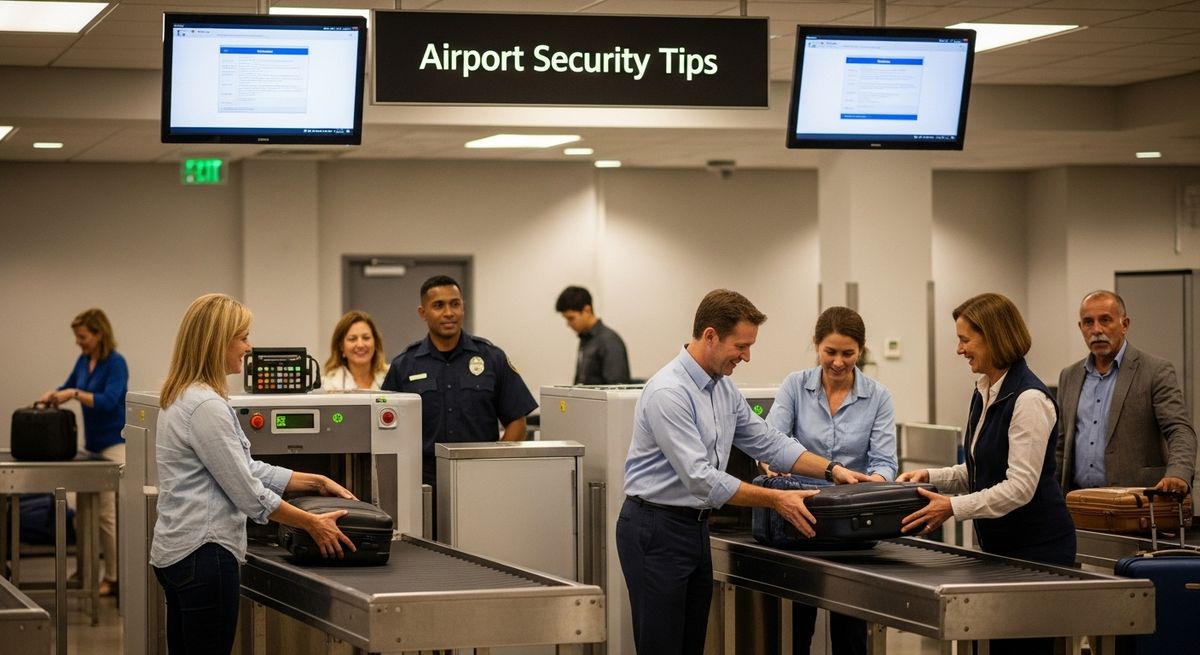
Understanding airport security tips for smooth travel
Airport security sounds like just another hassle between you and your vacation. But consider this. Over 4.7 billion passengers passed through airport security worldwide in 2023, each depending on layers of high-tech systems and sharp-eyed experts to stay safe. It is not the long lines or bag checks that matter most. The real surprise is in how invisible and advanced defenses work quietly around you to protect every single journey.
Quick summary
Comprehensive airport security protects all travelers
Airport security measures aim to ensure the safety of passengers, crew, and infrastructure against diverse threats.
Rigorous screening processes identify potential risks
Security protocols include identity verification, baggage scanning, and advanced imaging technologies to catch dangerous items.
Technology and human expertise enhance security
Combining advanced tech with trained personnel allows for more effective risk management and detection of potential threats.
Understanding security risks is essential for safety
Awareness of risks like cyber threats and unauthorized access helps improve overall security protocols and traveler safety.
Predictive security models foster proactive measures
Utilizing machine learning and global data sharing enhances threat detection and response in airport security systems.
What are airport security measures?
Airport security measures represent a comprehensive system designed to protect travelers, airport personnel, and aircraft from potential security threats. These protocols are critical in maintaining safe and secure air transportation, addressing risks ranging from potential terrorism to unauthorized access and dangerous materials.
The Core Purpose of Airport Security
The fundamental goal of airport security is prevention and protection. By implementing rigorous screening processes and advanced technological systems, airports work to identify and neutralize potential security risks before they can escalate.
Security measures are not just about stopping immediate threats but creating multiple layers of protection that make unauthorized or dangerous activities extremely difficult.
Key objectives of airport security include:
- Verifying passenger and staff identities
- Detecting prohibited items and potential weapons
- Preventing unauthorized access to secure areas
- Monitoring and controlling passenger and baggage movement
Technology and Human Expertise in Security Screening
Modern airport security combines sophisticated technological systems with trained human personnel. Advanced screening equipment like full-body scanners, X-ray machines, and metal detectors work alongside carefully trained security professionals who understand complex threat assessment protocols.
The screening process typically involves multiple stages:
- Initial document and identity verification
- Carry-on and checked baggage scanning
- Personal screening using advanced imaging technology
- Random additional checks and behavioral observation
These multifaceted approaches ensure that potential security risks are comprehensively evaluated. By creating overlapping layers of security, airports significantly reduce the probability of dangerous incidents occurring during air travel. The continuous evolution of security technologies and strategies reflects an ongoing commitment to passenger safety in an increasingly complex global environment.
Why airport security is critical for travelers
Airport security represents more than just a procedural requirement. It is a complex, dynamic system designed to protect passengers, crew members, and entire aviation infrastructure from potential threats that could compromise safety and national security.
Understanding the Multifaceted Nature of Security Risks
Modern air travel involves navigating an intricate landscape of potential security challenges. These risks extend far beyond traditional concerns about physical weapons or explosives. Contemporary security protocols must address sophisticated threats including cyber risks, advanced technological vulnerabilities, and complex international terrorism strategies.
Key security risks in air travel include:
- Potential terrorist activities targeting transportation systems
- Smuggling of prohibited items or dangerous materials
- Unauthorized access to secure airport zones
- Potential cyber attacks on aviation infrastructure
- International criminal network infiltration attempts
Personal and Collective Safety Implications
Airport security measures protect travelers at multiple levels. Beyond preventing direct physical harm, these protocols ensure a comprehensive safety ecosystem that maintains public confidence in air transportation. Security screenings create a protective barrier that minimizes risks not just for individual passengers, but for entire communities and national transportation networks.
The screening process serves several critical functions:
- Deterring potential criminal or terrorist activities
- Creating psychological reassurance for travelers
- Protecting critical transportation infrastructure
- Maintaining international travel standards and protocols
By implementing intelligent, adaptable security strategies, airports transform potential vulnerability into a robust, responsive system of protection. These measures represent a collaborative effort between technological innovation, human expertise, and global security intelligence, ensuring that air travel remains one of the safest modes of transportation in the modern world.
How airport security processes function
Airport security processes are meticulously designed systems that operate through integrated technological and human-managed protocols to ensure comprehensive safety and risk management. These complex mechanisms transform airport checkpoints into sophisticated screening environments that balance thorough protection with passenger convenience.
Passenger and Identification Verification
The initial stage of airport security focuses on confirming passenger identities and travel authorization. Security personnel carefully examine travel documents, comparing passenger information against multiple international watchlists and databases.
This critical first step helps identify potential risks before travelers enter secure airport zones.
Key identification verification components include:
- Passport and boarding pass authenticity checks
- Cross-referencing passenger names with international security databases
- Biometric scanning technologies
- Background screening for high-risk travelers
- Real-time digital verification systems
Advanced Screening Technologies and Procedures
Modern airport security leverages cutting-edge technological systems to detect potential threats. Full-body scanners, advanced X-ray machines, and sophisticated metal detectors work in concert to identify prohibited items and potential security risks. These technologies can detect everything from metal objects to complex chemical compounds that might pose a danger.
The screening process involves multiple sophisticated stages:
- Carry-on and checked baggage comprehensive scanning
- Personal screening using millimeter wave and X-ray technologies
- Trace detection for explosive and dangerous materials
- Random additional inspections and behavioral analysis
By integrating intelligent technological systems with trained human expertise, airport security processes create multiple protective layers. These interconnected screening mechanisms ensure that potential risks are comprehensively evaluated, making air travel one of the safest forms of transportation in the modern world.
Key concepts in airport security protocols
Airport security protocols represent a sophisticated system of interconnected strategies designed to protect travelers, aviation infrastructure, and national security interests. These comprehensive frameworks integrate advanced technologies, human expertise, and intelligent risk management approaches to create multiple layers of protection.
Fundamental Security Risk Management
At the core of airport security protocols lies a complex approach to risk assessment and mitigation. Security teams continuously analyze potential threats, developing adaptive strategies that anticipate and neutralize emerging security challenges. This proactive methodology transforms security from a reactive process to an intelligent, forward-looking system.
Key risk management principles include:
- Continuous threat intelligence gathering
- Dynamic threat assessment models
- Predictive risk analysis techniques
- Rapid response protocol development
- Integrated international security information sharing
Technological and Human Intelligence Integration
Modern airport security protocols blend cutting-edge technological systems with highly trained human expertise. Advanced screening technologies work in tandem with skilled security professionals who understand nuanced threat detection and behavioral analysis. This integrated approach allows for more sophisticated and adaptable security measures.
Critical components of intelligent security integration involve:
- Advanced artificial intelligence threat detection systems
- Behavioral pattern recognition technologies
- Human expertise in complex threat assessment
- Real-time data analysis and interpretation
- Adaptive learning security protocols
By creating multiple interconnected layers of security, airport protocols transform potential vulnerabilities into comprehensive protection systems. These intelligent frameworks represent a sophisticated approach to maintaining safety in an increasingly complex global transportation environment, ensuring that air travel remains a secure and reliable mode of transportation.
Impact of technology on airport security
Technological advancements have dramatically transformed airport security, creating sophisticated systems that provide unprecedented levels of protection and efficiency. These innovative solutions represent a quantum leap from traditional manual screening methods, integrating intelligent digital technologies that can detect complex security threats with remarkable precision.
Intelligent Screening Technologies
Modern airport security technologies leverage advanced computational systems and artificial intelligence to create multi-layered screening processes. These intelligent systems can analyze passenger data, detect potential risks, and identify suspicious patterns with speed and accuracy far beyond human capabilities. Computational algorithms work continuously to assess potential security threats, transforming raw data into actionable intelligence.
Key technological screening innovations include:
- Millimeter wave full-body scanners
- Advanced artificial intelligence threat detection systems
- Biometric facial recognition technologies
- Real-time behavioral pattern analysis algorithms
- Automated explosive trace detection equipment
Digital Infrastructure and Predictive Security
Digital technologies have revolutionized airport security by enabling predictive and proactive risk management strategies. Interconnected database systems allow instantaneous sharing of security information across international platforms, creating a global network of intelligent threat monitoring. These digital infrastructures can track potential risks, analyze historical data, and generate sophisticated risk assessments in real-time.
Critical digital security components involve:
- Global integrated security databases
- Machine learning threat prediction models
- Automated cross-referencing of passenger information
- Sophisticated cybersecurity protection protocols
- Adaptive risk assessment algorithms
By integrating cutting-edge technological solutions, airport security systems have transformed from reactive screening processes to intelligent, anticipatory protection networks. These technological innovations represent a profound shift in how we conceptualize and implement security, creating safer, more efficient travel experiences for passengers worldwide.
Take control of airport stress with reliable connectivity
Traveling through airport security can be overwhelming. Waiting in lines, managing digital boarding passes, and dealing with last-minute gate changes all require you to have access to your phone and data at every step. The article highlighted the importance of seamless processes and proactive preparation to avoid frustration and delays. One thing you should never worry about is surprise roaming fees or losing connection at a crucial moment. You deserve calm and confidence at every checkpoint.
Take the hassle out of your travel routine. With KnowRoaming’s international eSIM solutions, you can activate global data instantly on arrival, stay informed for security updates, and manage your journey with ease. Don’t let outdated SIM cards or unexpected roaming costs slow you down. Visit KnowRoaming now and discover simple activation, transparent pricing, and peace of mind for your next trip. Travel smart and arrive ready, start your hassle-free connection today.
अक्सर पूछे जाने वाले प्रश्न
Yes, but careful planning is required. Fans following a multi-country itinerary should plan transport, border crossings, and connectivity in advance.
Choose accommodation near public transport for easy access to the track.
You’ll need to bring everything you need to survive, including food, water, shelter, connectivity with an eSIM, and protection from dust. Expect no vendors, and no trash cans. Understanding what to know before going to Burning Man helps you avoid being overwhelmed and allows you to participate fully.
Often referred to as the festival of the Burning Man, it’s a week-long event in Nevada’s Black Rock Desert focused on art, self-expression, and community. The celebration ends with the symbolic burning of a massive wooden effigy, the Man, and is built entirely by its participants.
Start planning early, pack for extreme desert conditions, and prepare to be completely self-reliant. Learn the 10 Principles, bring plenty of water, and use a bike to get around. Don’t forget: mobile signal on the playa is limited, so download maps and key info in advance.
Bring layered clothing, a good camera with zoom, binoculars, sun protection, insect repellent and an eSIM to stay connected. Also bring a power bank and download offline maps if you're heading into remote parks.
The primary goals of airport security measures are to prevent potential threats, verify identities, detect prohibited items, prevent unauthorized access, and control the movement of passengers and baggage effectively.
Airport security screening processes involve multiple stages including identity verification, baggage scanning, personal screening using advanced imaging technology, and additional random checks to identify potential security risks.
Modern airport security utilizes advanced technologies such as full-body scanners, X-ray machines, metal detectors, artificial intelligence threat detection systems, and biometric scanning to enhance security screening and threat assessment capabilities.
Airport security measures enhance travelers’ safety by deterring potential criminal activities, creating psychological reassurance for passengers, and maintaining international travel standards which contribute to the overall security of the aviation infrastructure.
Ready to go? Browse KnowRoaming plans by destination and add one to your eSIM before you fly.