
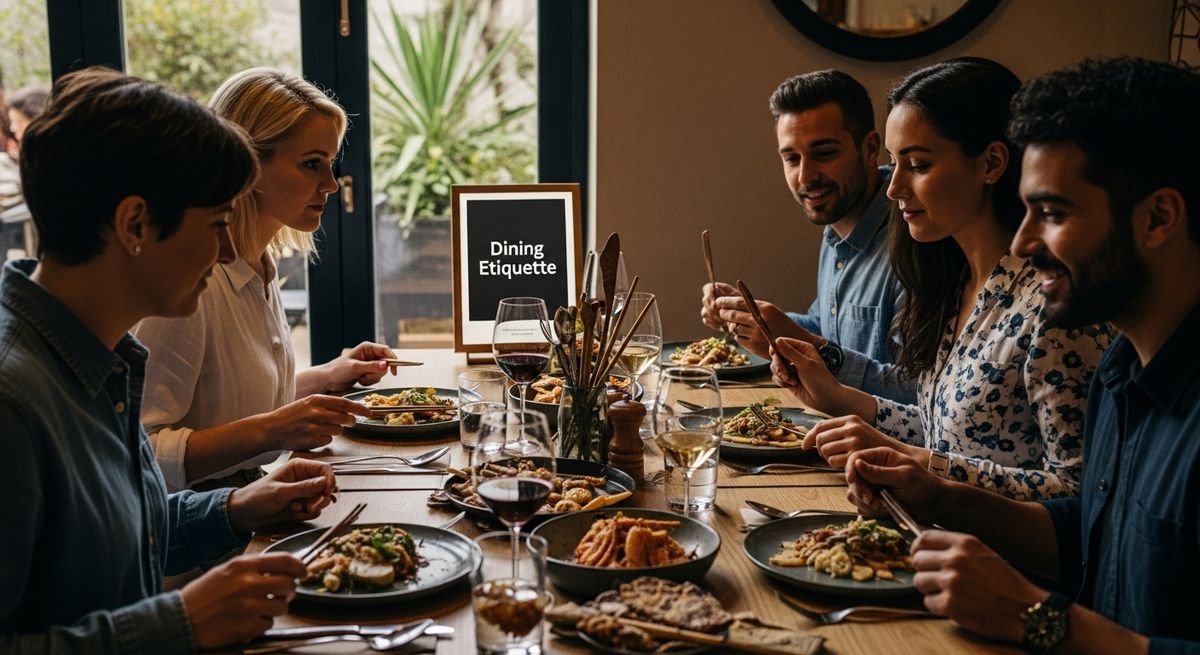
Understanding international dining etiquette for travelers
International dining etiquette might sound like a matter of which fork to use at dinner, but its impact goes much deeper. Some missteps can spark real tension and even derail business deals, especially since one wrong gesture at a meal can undo months of professional rapport. Understanding these cultural codes often matters more than knowing the menu, and that is where most travelers accidentally trip up.
Quick summary
Understand local dining rituals.
Familiarizing yourself with regional eating customs shows respect and helps avoid misunderstandings.
Nonverbal cues matter.
Gestures and body language convey significant cultural meanings that can impact social interactions.
Respect social hierarchies.
Acknowledge seating arrangements and serving orders, as these often reflect deeper cultural values.
Ask questions with humility.
Inquire about unfamiliar practices openly, demonstrating genuine curiosity and respect for local customs.
Be aware of dietary restrictions.
Understanding religious or philosophical influences on food choices can enhance cultural sensitivity and respect.
What is international dining etiquette?
International dining etiquette represents a complex system of unwritten social rules and cultural expectations that govern table manners, eating behaviors, and social interactions during meals across different global contexts. Understanding these nuanced practices helps travelers navigate potentially awkward social situations and demonstrate respect for local customs.
Cultural Foundations of Dining Practices
Dining etiquette emerges from deep cultural traditions that reflect societal values, historical practices, and social hierarchies. What might be considered polite in one country could be perceived as rude or offensive in another. These intricate protocols go far beyond simple table manners, encompassing everything from utensil usage and seating arrangements to conversational expectations and meal timing.
Key Cultural Considerations for International Dining Etiquette Include:
- Understanding local eating rituals and symbolic meanings
- Recognizing appropriate gestures and body language
- Knowing specific regional dining customs and taboos
The Global Importance of Dining Etiquette
Mastering international dining etiquette serves multiple purposes beyond avoiding social embarrassment. It demonstrates cultural intelligence, builds interpersonal connections, and shows genuine respect for local traditions. Travelers who invest time in learning these nuanced practices often find themselves welcomed more warmly and experiencing deeper, more meaningful cross-cultural interactions.
Professional settings like business dinners or international conferences particularly demand a sophisticated understanding of dining protocols. A single misunderstood gesture or inappropriate behavior could potentially damage professional relationships or negotiation outcomes.
Essential Skills for Navigating International Dining Scenarios:
- Observing and mirroring local dining behaviors
- Asking respectful questions about cultural practices
- Showing genuine curiosity and humility when encountering unfamiliar customs
By approaching international dining etiquette with an open mind and genuine respect, travelers can transform potentially stressful dining experiences into opportunities for cultural learning and meaningful connection.
The importance of understanding dining customs
Understanding dining customs is far more than a mere social nicety. It represents a profound method of cross-cultural communication and respect that transcends linguistic barriers. By comprehending local dining practices, travelers demonstrate cultural sensitivity and create meaningful connections with people from different backgrounds.
Cultural Communication Through Food
Food serves as a universal language that communicates complex social dynamics, historical traditions, and community values. Each dining custom tells a story about a society’s history, social structures, and interpersonal relationships. Utensil choices, eating sequences, and table behaviors are not random but deeply embedded cultural expressions that reflect generations of social development.
Key Ways Dining Customs Communicate Culture:
- Reflect historical agricultural and economic practices
- Demonstrate social hierarchy and community structures
- Represent philosophical and religious beliefs
Avoiding Cultural Misunderstandings
Misinterpreting dining customs can lead to significant social awkwardness and potentially damage professional or personal relationships. What seems like an innocent gesture in one culture might be profoundly offensive in another. For instance, chopstick placement in Japan, hand usage in Middle Eastern countries, or wine drinking etiquette in European nations all carry intricate symbolic meanings that require nuanced understanding.
Potential Consequences of Dining Etiquette Mistakes:
- Unintentional offense to hosts or colleagues
- Compromised professional networking opportunities
- Reduced effectiveness in cross-cultural communication
By investing time in learning dining customs, travelers transform potential cultural barriers into bridges of understanding. This approach demonstrates respect, curiosity, and cultural intelligence far more effectively than any verbal communication could achieve.
Ultimately, mastering international dining etiquette is about creating genuine human connections. It shows that you value and respect the cultural context of the people you are engaging with, turning every meal into an opportunity for meaningful cultural exchange.
Key concepts in global dining etiquette
International dining etiquette encompasses a complex network of unwritten rules, nonverbal communication, and cultural expectations that vary dramatically across different regions. Understanding these fundamental principles helps travelers navigate diverse dining environments with confidence and respect.
Universal Principles of Dining Respect
While specific customs differ globally, certain foundational principles of dining respect remain relatively consistent. These core concepts transcend individual cultural differences and represent fundamental ways humans communicate appreciation, gratitude, and social awareness through meal interactions.
Core Universal Dining Principles:
- Demonstrating genuine appreciation for food and hospitality
- Showing respect to hosts and fellow diners
- Maintaining appropriate table manners and personal hygiene
Contextual Understanding of Dining Behaviors
Dining etiquette is not about rigid adherence to rules but understanding the contextual nuances that inform different cultural practices. Each region develops unique dining customs based on historical, geographical, and social factors. These practices reflect deeper cultural narratives about community, hospitality, and interpersonal relationships.
Factors Influencing Dining Customs:
- Religious and philosophical traditions
- Agricultural and economic historical development
- Social hierarchy and family structures
- Geographical environment and available food resources
Nonverbal Communication in Dining Settings
Nonverbal cues play a critical role in international dining etiquette. Gestures, body language, and subtle social signals communicate more than words ever could. Understanding these nuanced communication methods helps travelers build genuine connections and demonstrate cultural sensitivity.
For example, hand gestures during meals, eye contact protocols, seating arrangements, and personal space boundaries all carry significant cultural meaning. What might seem like a minor gesture in one culture could be profoundly meaningful or potentially offensive in another.
By approaching international dining with curiosity, humility, and a willingness to learn, travelers transform potential cultural barriers into opportunities for meaningful cross-cultural understanding. The goal is not perfect execution of every cultural nuance but demonstrating genuine respect and openness to different ways of experiencing shared meals.
How cultural background influences dining norms
Cultural background serves as a profound lens through which dining practices are shaped, interpreted, and experienced. Every society develops unique eating rituals that reflect its historical, social, and philosophical foundations. These dining norms are not arbitrary but deeply rooted in complex cultural narratives that communicate values, social structures, and collective identity.
Social Hierarchy and Meal Dynamics
In many cultures, dining practices serve as a subtle yet powerful mechanism for expressing social hierarchy and interpersonal relationships. Some societies emphasize strict seating protocols, specific serving orders, or ritualized interactions that signal respect and social positioning. For instance, in traditional Asian cultures, the eldest or most senior individual often receives first servings or initiates eating, symbolizing familial and professional respect.
Key Manifestations of Social Hierarchy in Dining:
- Specific seating arrangements based on age or status
- Ritualized serving and eating sequences
- Distinct communication protocols during meals
Philosophical and Religious Influences
Religious and philosophical traditions profoundly shape dining behaviors, transforming meals from mere nutritional experiences into spiritual and cultural expressions. Dietary restrictions, mealtime practices, and food preparation methods often reflect deep-rooted belief systems. Vegetarianism in Hindu and Buddhist traditions, halal and kosher dietary laws, and fasting practices during religious periods demonstrate how spiritual perspectives directly influence culinary experiences.
Cultural Belief Systems Impacting Dining Practices:
- Religious dietary restrictions and prohibitions
- Spiritual significance of specific ingredients
- Ritualized food preparation and consumption
Communal vs. Individual Dining Perspectives
Cultural backgrounds dramatically influence whether dining is perceived as a communal or individualistic experience.
Collectivist societies often emphasize shared dishes, family-style serving, and meals as opportunities for social bonding. In contrast, individualistic cultures might prioritize personal plate portions, individual food choices, and more structured dining interactions.
These nuanced dining norms represent more than mere eating protocols. They are living, dynamic expressions of cultural identity that communicate complex social narratives.
Travel with etiquette and stay connected instantly
Mastering international dining etiquette means you are already prepared to navigate complex cultural situations, but what about staying just as prepared with your mobile connectivity? Just like understanding table manners or knowing when to ask about local customs, ensuring you have reliable data access prevents awkward moments and helps build stronger travel experiences. Don’t let high roaming charges or difficult SIM swaps take away from the positive and respectful impressions you’ve learned to deliver abroad.
Experience true cultural confidence: pair your knowledge of dining customs with seamless mobile connectivity. With KnowRoaming, choose a digital SIM that activates instantly across borders. Be ready for any situation and avoid costly surprises. Visit our site now and take charge of your travel tech as easily as you manage your international etiquette.
常见问题解答
With a reliable global eSIM for backpackers, you can fully utilize essential apps for your journey. These include: KnowRoaming to stay connected while traveling. Google Maps for navigation, often with offline capabilities. Hostelworld / Booking.com for accommodation. Omio or Rome2Rio for transport planning. Google Translate for language barriers. WhatsApp for messaging and calls with friends and family. Splitwise for managing group expenses. These apps, combined with your eSIM data, ensure you're always informed and connected on the go.
Apps like Hopper for flight price tracking, Wise for international money management, and PackPoint for smart packing lists help you travel well without overspending.
GetYourGuide is one of the best travel apps for discovering and booking tours, activities, and cultural experiences, with verified reviews and instant mobile tickets.
Polarsteps allows travelers to log trips in real time, map visited destinations, and create a beautiful digital travel diary.
Timeshifter is an expert-designed app that creates personalized jet lag plans based on your itinerary, sleep habits, and time zone transitions.
HotelTonight offers discounted rates on same-day hotel bookings, making it one of the best apps for spontaneous or flexible travelers.
International dining etiquette refers to the unwritten rules and cultural expectations that govern table manners, eating behaviors, and social interactions during meals in different cultures. Understanding these practices helps travelers navigate social situations and respect local customs.
Understanding dining customs is crucial as it demonstrates cultural sensitivity and facilitates meaningful connections with people from different backgrounds. It helps avoid social misunderstandings that could potentially harm personal or professional relationships.
Travelers can learn about specific dining customs by observing local behaviors, asking respectful questions, and researching cultural practices before their visit. Engaging with locals and showing curiosity can also provide valuable insights into local etiquette.
Universal principles of dining respect include demonstrating appreciation for food and hospitality, showing respect to hosts and fellow diners, and maintaining appropriate table manners and personal hygiene during meals.
Ready to go? Browse KnowRoaming plans by destination and add one to your eSIM before you fly.