
Une application, un contrôle total.
Gérez vos forfaits, vos données et votre eSIM depuis votre téléphone, où que vous soyez.




Yes. The LATAM plan covers Costa Rica and 14 other countries, including Panama and Nicaragua, and your phone switches networks by itself at the border. Details in does a region plan cover every country in it?
In Costa Rica your plan connects to Claro on 4G LTE, which handles maps, messaging, video calls, and streaming; 5G is not part of this plan. Your phone joins the network automatically once the plan is switched on. If it hasn't connected a minute after landing, work through the no-signal checklist.
Yes, over the plan's data, and it's the navigation app Costa Rica runs on. Download the offline map for the areas you'll drive as well, since the gravel roads to Monteverde and the far beaches lose signal on every network.
In the gateway towns, yes; in the parks, no, on any network. Save your permits, bookings, and the lodge's number before you leave the mainland roads.
It depends on how much data you want and how many days you're staying. A fixed plan costs less overall; an unlimited plan (5 GB a day at full speed, then slower) works out to a lower daily rate the longer you stay. Every current option and price is in the plan selector at the top of this page.
In the app: open My plans, choose your Costa Rica plan, and tap Top up. The extra data lands on the same eSIM within a few seconds, with nothing new to add or scan. Full steps are in topping up data without reinstalling the eSIM.
Weeks ahead. The plan's days don't start until you turn it on and connect, so a plan bought a month before departure is still complete when you land. Plans need to be activated within 90 days of purchase. See what plan validity means and when it starts.
If it's eSIM-compatible and carrier-unlocked, yes, which covers most phones sold since 2019. The one-minute check for iPhone, Android, and Samsung is in is my phone eSIM compatible?
Gérez vos forfaits, vos données et votre eSIM depuis votre téléphone, où que vous soyez.
Set it up before you fly. It's live the moment you land, nothing to check, nothing to remember.
Already with us? Get the app on the App Store or Google Play.
Costa Rica is a rental-car country where the navigation app is the co-driver, the lodge confirms by WhatsApp, and the road to the cloud forest turns to gravel without warning. The best eSIM for Costa Rica is the one added at home, on Wi-Fi, so the phone is live when you walk out of San José or Liberia and the car-rental shuttle is a message away.
Below: how a Costa Rica plan works, how to set it up before you fly, what to expect on the roads, at the beaches, and in the parks, and which plan fits when Panama or Nicaragua is on the same trip.
A Central American trip rarely stays in one country; the buses and the border posts are part of it. KnowRoaming is built for that. You add the KnowRoaming eSIM, called KR.One, to your phone once, then add a plan per trip: Costa Rica now, a LATAM plan the year the route runs down the isthmus, anywhere else after that. The eSIM stays; only the plan changes, and nothing needs deleting when you get home.
The plan's days start when you turn it on and connect in Costa Rica, not at checkout. Buy it weeks ahead, add it at home, and a delayed flight costs you nothing. The full rule is in what plan validity means and when it starts.
Choose a fixed plan for a set amount of data at the lowest overall price, or an unlimited plan when you'd rather not count. Unlimited plans give you 5 GB a day at full speed, then a slower speed until the allowance resets the next day. If a fixed plan runs low, top up in the app and the extra data lands on the same eSIM.
See it in two minutes: Meet KR.One, iPhone setup with KR.One, or Samsung setup with KR.One.
Do this at home on Wi-Fi. It takes about a minute.
Prefer a QR code? The checkout page and your confirmation email both carry one; scan it from your phone's settings. Every tap, by device, is in adding your eSIM on iPhone, adding your eSIM on Android, and adding your eSIM on Samsung, or watch the iPhone QR walkthrough or the Samsung QR walkthrough. Still no signal after landing? Work through the no-signal checklist.
Juan Santamaría at San José serves the central valley and the Caribbean side; Liberia's airport is the gateway to Guanacaste's beaches. Most visitors rent a car, and a 4x4 is worth it outside the dry season; the rental shuttles meet the flight, the mandatory insurance is explained at the counter, and the navigation app of choice in Costa Rica is Waze, which runs over the plan's data. Uber operates in the central valley.
The colón is the currency and US dollars are accepted nearly everywhere; cards work in hotels, restaurants, and supermarkets, and cash covers the sodas, the fruit stands, and the smaller lodges.
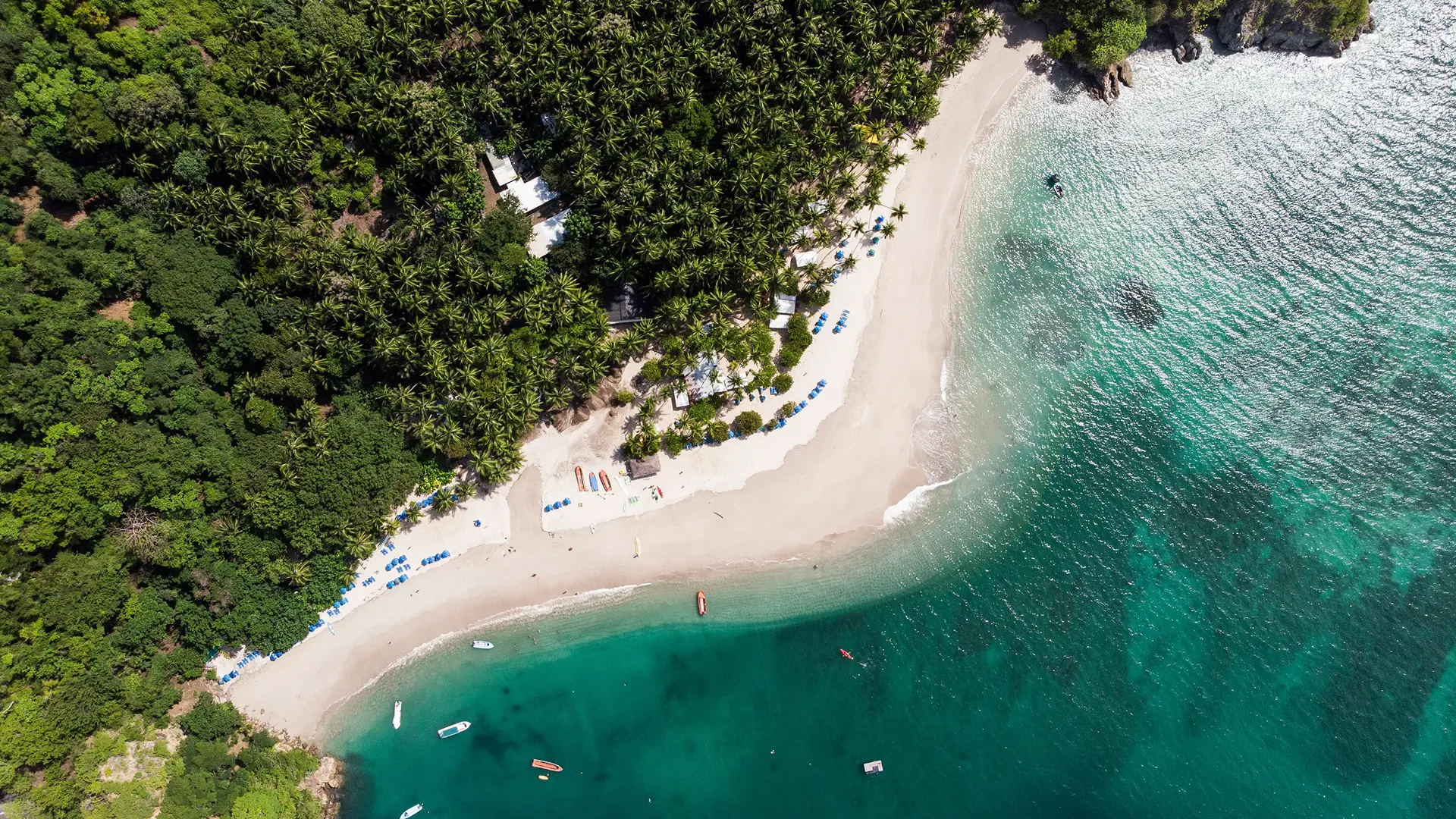
The drive is the trip: Arenal's volcano and hot springs, Monteverde's cloud forest by a road that is still partly gravel, the Nicoya peninsula's surf towns, Manuel Antonio's park and beaches, and the Caribbean side's Puerto Viejo. Distances are short on the map and long on the road; two hours on paper is three in practice.
Claro's 4G covers the towns and the main roads, and drops out on the gravel stretches, in the cloud forest, and along the empty beaches. Download the route and the lodge's number before each drive; the arrival message is the one that matters.
Corcovado National Park on the Osa peninsula and Tortuguero on the Caribbean are reached by boat or small plane, and both are offline once you arrive: the lodges have Wi-Fi in the lobby at best, and the trails have nothing. Permits for Corcovado are booked ahead through a licensed guide, and the turtle season at Tortuguero, from July to October, fills the lodges. Save everything before you leave the mainland roads.
The Nicoya peninsula's surf towns, Santa Teresa, Nosara, and Tamarindo, are the other end of the spectrum: good 4G in town, nothing on the beach breaks, and ATMs that run out on weekends. Small planes from San José reach the peninsula and the Osa in under an hour and save a full day's driving.
Costa Rica is on the LATAM plan, 15 countries on one plan that also covers Panama and Nicaragua, switching networks by itself at the Paso Canoas or Peñas Blancas crossings; the Bocas del Toro trip into Panama is covered end to end. A Costa Rica-only plan stops at the border. Read do I need a new plan for every country? for the detail.
Bocas del Toro, the Panamanian archipelago across the Caribbean border, is a common add-on and sits inside the plan's coverage; the boats between its islands are the usual signal gaps.
May to November is the green season, with dry mornings and heavy afternoon rain, lower prices, and rivers that close the odd road; December to April is dry, busy, and booked ahead, especially over Christmas and Easter. Lodges and tour operators post weather changes to WhatsApp first, which is the practical reason to keep the plan on.
Your plan connects to Claro on 4G LTE. There is no 5G on this plan. Coverage is strong in San José, Liberia, and the beach towns and holds on the main highways. Your phone picks the network automatically once the plan is on; there is nothing to choose by hand.
In the cloud forest, on the gravel roads, and in Corcovado and Tortuguero, expect gaps or nothing on any network. Save what you need in town.
Most phones sold since 2019 support eSIM, including iPhone XS and later and most Android flagships from the same window. Check yours before you add a plan; it takes a few seconds. On iPhone, go to Settings, General, About and look for an EID or Available SIM. On Android, go to Settings, Network & Internet, SIMs and look for an option to add an eSIM. On Samsung, dial *#06# and look for an EID.
Your phone also needs to be carrier-unlocked. If you're not sure, carrier-locked vs unlocked: how to tell shows you where to look.
Adding a Costa Rica plan doesn't touch your regular SIM. Calls and texts on your usual number keep working exactly as before. The new plan handles data while you're there, and most phones run both at once without you doing anything else. Bank codes and two-factor texts still arrive on your home number, as long as that line stays switched on.
In Central America the alternatives are your home carrier's roaming rate, often unavailable outside the capital; a local SIM at each border with a new number each time; or hostel Wi-Fi that is fine until you're on a bus. A Costa Rica plan added at home beats all three: one price agreed before you fly, live the second you land, and a LATAM plan if the route crosses borders.
Real travelers rate KnowRoaming 4.5 out of 5 on Reviews.io. More than a decade in travel connectivity, more than 200 destinations, and support that doesn't clock off: WhatsApp and live chat, any time, any day.
One plan. No roaming surprises. Live the moment you land.
Get the app on the App Store or Google Play.
4.5 out of 5 on Reviews.io. 200+ destinations. Support that doesn't clock off.
Very easy to set up.
Iviwe
Cape Town, ZA
i had no issues. however i am moving to a provider that provides 365 packages at reasonable rates. u dont do that currently. also because im buyinhg on mtn which is using u u are getting my support bec its easier. u have to offer better packages. also i was charged 20% more than the advertized rate, i am currently in dispute with mtn.
Siki
Great service
Edmond N