
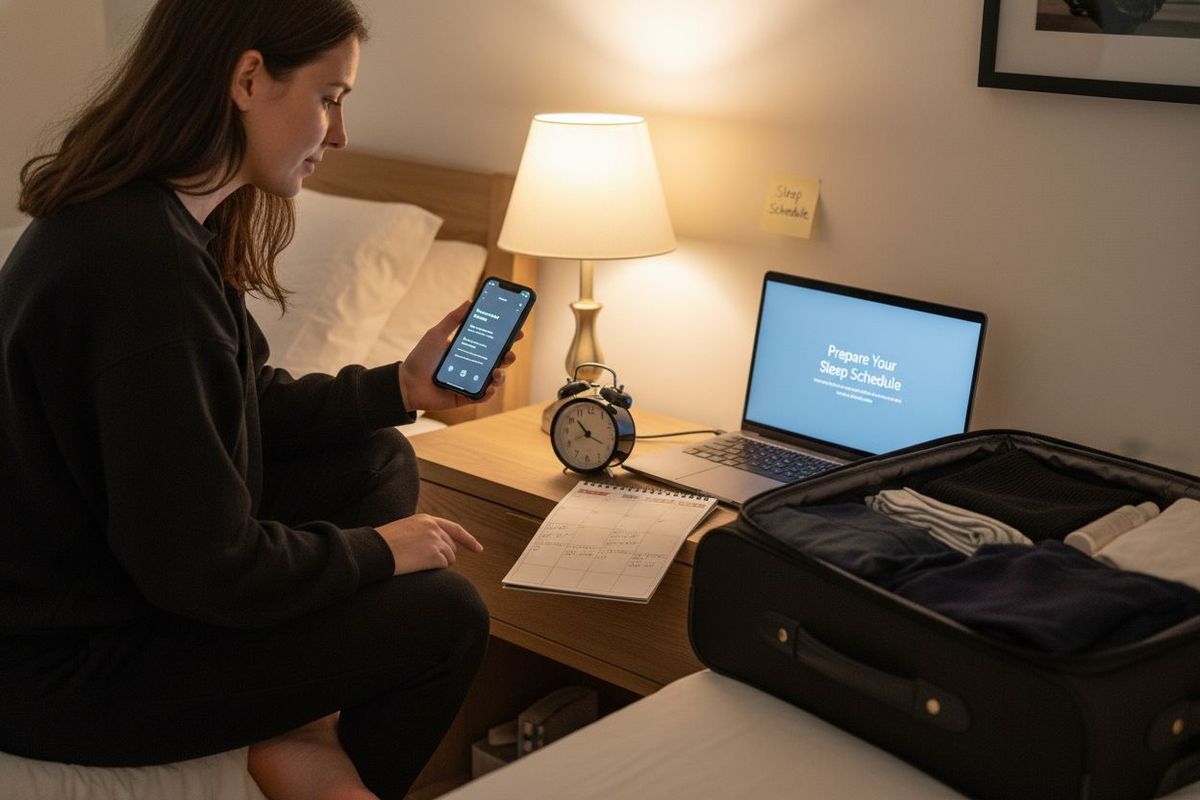
How to avoid jet lag naturally, proven strategies
Jet lag can turn even the most carefully planned adventure into a foggy blur. Most people believe it just takes time to recover and that sluggish days are unavoidable. But scientists have found you can actually cut recovery time almost in half by preparing before you ever leave home. This secret could make your next trip feel effortless.
Quick summary
1. Adjust your sleep schedule pre-departure
Shift your sleep times 3-4 days ahead to match your destination’s time zone for smoother adaptation.
2. Stay hydrated during your flight
Drink water consistently during your flight to combat dehydration, which worsens jet lag symptoms.
3. Align activities with local time upon arrival
Engage in local time activities immediately to reset your internal clock and minimize fatigue.
4. Utilize natural light strategically
Seek sunlight to help realign your circadian rhythm according to your time zone, enhancing alertness.
5. Test and refine personal recovery techniques
Document your recovery strategies and adjust them based on what works best for you during travels.
Step 1: Prepare your sleep schedule before departure
Jet lag disrupts your body’s natural rhythm, turning exciting travel into an exhausting experience. Preparing your sleep schedule before departure can significantly reduce these disruptive effects and help you adjust faster to new time zones.
Starting three to four days before your trip, begin strategically shifting your sleep and wake times to match your destination’s time zone. This gradual adjustment helps your internal biological clock adapt more smoothly. If you’re traveling east, start going to bed earlier and waking up earlier. When traveling west, do the opposite - go to bed later and wake up later.
For example, if you’re flying from New York to London, which is five hours ahead, start adjusting your sleep schedule by going to bed 30-45 minutes earlier each night in the days leading up to your departure. Use tools like smartphone alarms or sleep tracking apps to help maintain this schedule. Some travelers find using blackout curtains or dim lighting can support this transition, signaling to your body that it’s time to shift sleep patterns.
Physical preparation is equally important. In the days before travel, maintain a consistent sleep routine, aiming for 7-9 hours of quality sleep. Reduce caffeine and alcohol intake, which can disrupt sleep patterns. Stay hydrated and avoid heavy meals close to bedtime. Light exercise can help regulate your circadian rhythm, but avoid intense workouts late in the evening that might interfere with your sleep adjustment strategy.
Key preparation actions include:
- Set smartphone alarms to gradually shift bedtime
- Use sleep tracking apps to monitor sleep quality
- Create a consistent pre-sleep routine
- Practice relaxation techniques like deep breathing
By methodically preparing your sleep schedule, you’ll arrive at your destination more alert, adaptable, and ready to enjoy your travel experience without the heavy fog of jet lag.
Step 2: Stay hydrated during your flight
Dehydration is a silent enemy of comfortable travel, dramatically amplifying jet lag symptoms and making your journey unnecessarily challenging. Proper hydration during flights becomes crucial in maintaining your body’s natural rhythm and minimizing travel fatigue.
Aircraft cabins have extremely low humidity levels, typically around 10-20%, which is significantly drier than most indoor environments. This dry air accelerates moisture loss from your body, leading to quicker dehydration. Begin your hydration strategy before boarding by drinking water and avoiding diuretic beverages like alcohol and caffeine, which can further deplete your body’s water reserves.
During the flight, drink water consistently rather than waiting until you feel thirsty. Aim to consume approximately 8 ounces of water for every hour you’re in the air. Consider bringing an empty reusable water bottle through security and filling it after passing checkpoints. This ensures you have a personal water supply and can track your intake more effectively. Flight attendants are usually happy to refill your bottle, so don’t hesitate to ask.
Avoid relying solely on complimentary beverage services. Pack electrolyte packets or tablets that can be added to water, helping replace minerals lost during travel. These small additions can make a significant difference in how your body processes hydration and combats jet lag symptoms. Some travelers find that herbal teas without caffeine can also contribute to fluid intake while providing additional relaxation benefits.
Key hydration strategies include:
- Bring a refillable water bottle
- Drink water consistently throughout the flight
- Pack electrolyte supplements
- Limit alcohol and caffeine intake
By prioritizing hydration, you’re not just drinking water - you’re actively preparing your body to adapt more smoothly to new time zones and reduce the potential severity of jet lag.
Step 3: Adjust to the new time zone upon arrival
Successfully managing jet lag requires strategic actions immediately after landing. Resetting your internal clock becomes crucial the moment you step into your destination, with your body craving signals that will help it synchronize to the new time zone.
The moment you arrive, align your activities precisely with the local time, regardless of how exhausted you might feel. If it’s daytime when you land, resist the temptation to nap. Instead, engage in light physical activities that expose you to natural sunlight. Walking around, exploring your new environment, or sitting in an outdoor cafe can help stimulate your body’s wakefulness mechanisms. Sunlight is a powerful regulator of your circadian rhythm, signaling to your brain that it’s time to be alert.
If you arrive in the evening, prepare for sleep by creating a conducive environment. Take a warm shower, wear comfortable clothing, and avoid electronic devices that emit blue light. Blue light can trick your brain into thinking it’s daytime, further disrupting your sleep cycle. Some travelers find that using blackout curtains or an eye mask can help create the darkness needed to trigger sleep hormones.
Nutrition plays a significant role in adjusting to a new time zone. Eat meals according to the local schedule, even if you’re not particularly hungry. Your digestive system is another powerful clock that helps reset your internal rhythm. Choose light, easily digestible meals that won’t overwhelm your system. Avoid heavy foods that might cause discomfort or make you feel sluggish.
Key arrival adjustment strategies include:
- Expose yourself to natural sunlight
- Engage in light physical activity
- Eat meals according to local time
- Avoid long naps during the day
By methodically aligning your activities with local time, you’re essentially training your body to adapt quickly, minimizing jet lag’s disruptive effects and maximizing your travel experience.
Step 4: Optimize your exposure to natural light
Light is the most powerful natural mechanism for resetting your body’s internal clock, making strategic sunlight exposure a critical tool in combating jet lag. Your circadian rhythm responds directly to light signals, which can either accelerate or hinder your adaptation to a new time zone.
Immediate and intentional light exposure after arrival becomes crucial in realigning your biological rhythms. If you’ve traveled eastward, seek morning sunlight to help advance your internal clock. When traveling westward, afternoon or early evening light can help delay your sleep cycle. This targeted approach essentially tells your brain when to be alert and when to prepare for rest.
Planning outdoor activities shortly after landing can serve multiple purposes. Walking tours, local park visits, or simply sitting at an outdoor cafe provide natural light while simultaneously helping you explore your destination. Choose activities that keep you moving and exposed to sunlight, avoiding dark indoor spaces that might trigger sleepiness. Some travelers use light therapy devices if natural sunlight is limited, particularly in destinations with overcast weather or during winter months.
The quality and timing of light exposure matter significantly. Direct sunlight is most effective, but even ambient daylight can help reset your internal clock. Wear sunglasses with appropriate UV protection, but try to get unfiltered light exposure for at least 30 minutes after arriving. If your destination has limited daylight, consider positioning yourself near windows or in well-lit spaces to maximize light absorption.
Key light optimization strategies include:
- Seek direct sunlight within hours of arrival
- Plan outdoor activities during daylight
- Avoid dark, enclosed spaces immediately after landing
- Use light therapy devices if natural light is scarce
By understanding and manipulating your body’s relationship with light, you transform a potential travel disruption into an opportunity for smooth, efficient adaptation to new time zones.
Step 5: Maintain a healthy diet and exercise
Diet and physical activity are powerful weapons in your battle against jet lag, acting as natural reset mechanisms for your body’s internal systems. Strategic nutrition and movement can dramatically reduce the duration and intensity of travel-related fatigue and disorientation.
Your dietary approach should mirror the local eating schedule, regardless of what your body might be signaling. If it’s breakfast time at your destination, eat a meal that reflects local breakfast patterns, even if your body feels like it should be sleeping. Choose foods that are light, easily digestible, and provide steady energy. Lean proteins, complex carbohydrates, and fresh fruits can help stabilize your metabolism and provide consistent energy without causing digestive stress.
Avoid heavy, greasy meals that can make you feel sluggish and disrupt your body’s adjustment process. Processed foods and excessive sugar can create additional metabolic challenges when your system is already working to recalibrate. Opt for meals that include a balance of nutrients - think grilled proteins, steamed vegetables, and whole grains. Smaller, more frequent meals can help maintain steady blood sugar levels and provide consistent energy throughout the day.
Physical movement plays an equally critical role in combating jet lag. Gentle exercise helps stimulate circulation, boost metabolism, and signal to your body that it’s time to be awake. This doesn’t mean intense workouts, but rather consistent, low-impact activities like walking, stretching, or light yoga. If possible, incorporate your exercise into exploring your new destination - walking tours, casual bike rides, or swimming can serve dual purposes of adaptation and sightseeing.
Key diet and exercise strategies include:
- Eat meals according to local time
- Choose light, nutrient-dense foods
- Engage in gentle, consistent physical activity
- Stay hydrated with water and herbal teas
By treating your body as a holistic system and providing it with consistent, supportive signals, you can significantly reduce jet lag’s impact and emerge ready to fully enjoy your travel experience.
Step 6: Test your recovery techniques for best results
Jet lag is not a one-size-fits-all experience, making personalized recovery strategies essential for effective travel adaptation. Understanding your body’s unique response to time zone changes requires deliberate observation and strategic experimentation.
Start by creating a detailed travel journal documenting your jet lag symptoms, recovery techniques, and their effectiveness. Track metrics like sleep quality, energy levels, alertness, and overall mood during the first few days after arrival. Use smartphone apps or simple notebook entries to record when you feel most tired, when you experience peak alertness, and how quickly you adjust to the new time zone. This personal data becomes invaluable for refining your approach in future travels.
Experiment with different recovery techniques during subsequent trips, changing one variable at a time to understand its specific impact. For some travelers, meditation and deep breathing exercises might prove more effective than light therapy. Others might find that specific dietary adjustments or exercise routines accelerate their adaptation. The key is to remain observant and flexible, recognizing that your body’s response can vary depending on destination, travel direction, and personal physiology.
Technology can be a powerful ally in this process. Wearable fitness trackers and sleep monitoring apps can provide objective data about your body’s rhythms. These tools can help you identify patterns and validate the effectiveness of your jet lag mitigation strategies. Some advanced devices even offer recommendations based on your personal sleep and activity data, turning your recovery into a more scientific and personalized experience.
Key testing and recovery strategies include:
- Keep a detailed travel recovery journal
- Use technology to track sleep and energy patterns
- Experiment with one technique at a time
- Remain flexible and patient with your body’s adaptation
By approaching jet lag as a personalized challenge and systematically testing recovery techniques, you transform a potential travel disruption into an opportunity for self-discovery and improved future travel experiences.
Unlock the power of effortless travel and beat jet lag for good
You work hard to adjust your sleep schedule, prioritize hydration, and embrace sunlight to naturally overcome jet lag. Yet even with proven strategies, unreliable mobile connections and confusing roaming fees can disrupt your journey and add extra stress when you need it least. Smooth international connectivity is just as essential as managing your body clock and finding the right meals after a long flight.
Why risk hassle and hidden fees while traveling abroad? With KnowRoaming’s eSIM for Travelers, you can instantly activate affordable global data plans and manage your connection on the go, without physical SIM cards or the risk of insecure public Wi-Fi. Enjoy broad coverage, crystal-clear setup, and transparent billing as you optimize your recovery routines and put your energy toward adapting quickly to new time zones. Visit KnowRoaming now and see how a seamless digital SIM makes every journey easier. Take control of both your body and your mobile connection today so you can focus on feeling your best from the moment you land.
Domande frequenti
How to use an eSIM while backpacking is surprisingly simple. First, ensure your phone is unlocked and eSIM-compatible. Then, download the provider's app (like KnowRoaming's). You can choose your plan and add the eSIM digitally through the app, often by scanning a QR code. Once added, just enable data roaming for your eSIM, and you're ready to go, no physical cards or airport kiosks needed.
No swapping SIM cards, no kiosk queues at the airport, set it up once and it's ready every time after.
With KnowRoaming, setup takes less than five minutes. Using the automatic setup in the KnowRoaming app, you can download and add your eSIM in just a few taps. This makes it one of the fastest and most reliable ways to get connected before your trip.
Simply add the eSIM profile on your unlocked, eSIM-compatible device before you travel. Once you arrive in a supported country, turn on your eSIM, and you'll be connected!
Absolutely, in fact, that’s what we recommend.
It’s quick and easy. Use the KnowRoaming app to purchase and automatically add your eSIM in just a few taps. Some devices may require manual setup, but our support team and setup guides are available 24/7.
To prepare your sleep schedule, start adjusting your sleep and wake times 3-4 days before departure to align with your destination’s time zone. Gradually go to bed and wake up 30-45 minutes earlier or later, depending on your travel direction, and maintain a consistent sleep routine with relaxation techniques.
Drink water consistently throughout your flight, aiming for roughly 8 ounces of water per hour. Avoid alcohol and caffeine, which can dehydrate you, and consider bringing a refillable water bottle to track your intake effectively.
Upon arrival, align your activities with local time. If it’s daytime, engage in light physical activity and expose yourself to natural sunlight to help reset your internal clock. If it’s evening, prepare for sleep without using electronic devices that emit blue light.
Eating meals in accordance with the local schedule and opting for light, nutrient-dense foods can help stabilize energy levels. Additionally, gentle physical activities like walking can enhance circulation and signal your body to wake up, aiding in the adaptation process.
Need the exact taps for your phone? See adding your eSIM on iPhone, adding your eSIM on Android, or adding your eSIM on Samsung.