
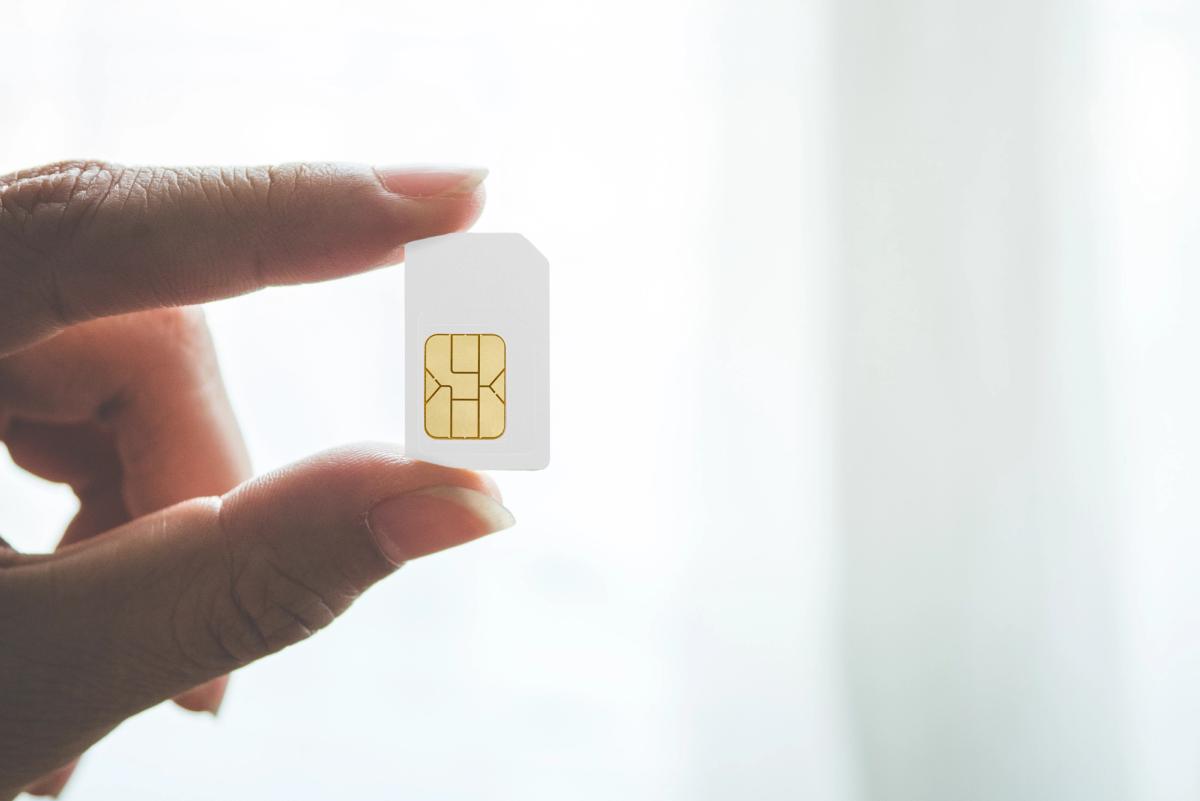
How do SIM cards & global eSIMs differ? We explain
eSIM vs. physical SIM signal strength
When it comes to connectivity, signal strength and speed are two of the most crucial factors. Having a solid and dependable signal is essential. You might believe that there is some technical difference between an eSIM and a standard SIM card that affects the signal strength. In truth, though, there are no technical considerations that lead to a benefit or drawback in terms of signal strength. How well a signal travels depends on the physical structure of the cellular network. Below we compare eSIMs and physical SIM cards.
eSIM explained
A simple definition of an eSIM would be a virtual SIM card that is integrated into a mobile device that supports it. To do away with the necessity for a physical SIM card slot, electronic SIMs are tiny chips that are placed onto the circuit board of the device. It keeps the encryption keys and network credentials needed to connect to a cellular network. This technology has become increasingly popular.
An eSIM allows you to activate a cellular plan via the software already built into your device. You can easily switch cellphone carriers, data plans, and service providers without ever touching a real SIM card. Most modern smartphones have it built in, and it can be remotely programmed via software.
eSIMs and physical SIMs are almost the same on the outside. The primary distinction is the ability to remove an actual SIM card. It is also not necessary to physically swap out eSIMs in order to switch carriers or plans because these chips are reprogrammable and integrated into the motherboard of the device.
To switch your SIM, simply go online, buy and download an eSIM data plan, and connect to your mobile network of choice.
More than one profile can be stored on an eSIM. You don’t even have to bring a travel SIM when you're on the go. An eSIM for travel can be downloaded, saved, and activated on your phone as needed.
Supporting numerous network profiles at once is a major strength of eSIM technology. In other words, you can have numerous network providers set up on your device and switch between them whenever you choose. Having a local network profile for each place you visit ensures that you always have access to economical and dependable cellular services, which is especially helpful if you travel internationally frequently.
Internet of Things (IoT) devices also provide new opportunities thanks to eSIM technology. Managing and updating the connectivity of several devices can be a hassle with traditional SIM cards. But with eSIMs, network profile provisioning and management can be done remotely, simplifying large-scale IoT device deployment and maintenance.
Essentially, an eSIM performs the same functions as a regular SIM card, but with additional advantages.
Signal strength of eSIM vs. physical SIM
There are several elements at play that contribute to receiving a decent, strong signal. Traditional SIM cards and eSIMs are both affected by a variety of factors that influence signal strength. These include distance from the cell tower, obstructions, interference, and the device's antenna quality.
The closer a device is to a cell tower, the stronger the signal. Obstacles like buildings, trees, or dense vegetation can affect signal strength. Even if you're close to a cell tower, obstructions can decrease or block the signal, much as unusually thick walls or floors in your home can interfere with Wi-Fi. Interference from radio waves and electronic equipment can also degrade signal strength.
Regardless of the SIM card you choose, the quality of your device's antenna can have an impact on signal quality. A device with a high-quality antenna may capture and transmit signals more efficiently, resulting in increased signal strength.
Despite being frustrating, the type of SIM card you're using has no control over these factors. Cell towers, obstructions, interference, and the strength of a device's data antenna can impact all SIM types.
Technical factors that impact signal strength
You might assume that there are some technical differences between eSIMs and standard SIM cards that affect signal strength. However, this has no truth in it. The cellular network infrastructure plays a critical role in signal strength. Both types of SIM cards rely on the same underlying network to deliver signal coverage. Any change you experience in signal strength is most likely caused by external causes, not the type of SIM you're using.
The role of the network provider in signal strength
Network providers are the ones that have a huge impact on the signal strength and coverage of all SIMs. They are responsible for ensuring that you have a seamless, connected experience when utilizing any SIM.
When network providers prioritize strengthening their network infrastructure and investing in new technologies, they help to improve signal strength for all types of SIMs. They can improve signal strength and connectivity for all of their network customers by strategically deploying cell towers and antennas, which are responsible for generating robust networks.
Furthermore, network providers constantly check and maintain their network equipment to ensure peak performance. They do regular inspections, make required repairs, and upgrade outdated equipment. This proactive technique helps to reduce signal disruptions while also ensuring that users have a consistent and dependable signal experience.
If you live or visit a rural place, your signal strength might be quite low. Network providers strive to increase their network coverage, especially in these rural areas, in order to give consistent signals to all of their clients, regardless of SIM type.
Network operators also use signal amplification techniques to strengthen weak signals and lessen signal deterioration, resulting in a consistent connection for eSIM and traditional SIM card users.
Whether you're using a regular SIM card or an eSIM, examine the network provider you intend to use to guarantee you have the best possible coverage in your area.
The future of signal strength
Signal quality is likely to improve as technology advances. Signal reception is expected to improve overall as network infrastructure continues to improve and eSIM use grows.
Furthermore, when device manufacturers and network operators adopt eSIM, the market will become more competitive. This competition will spur additional ideas and improvements in signal reception. Network operators will aim to provide the highest signal quality to attract and keep eSIM users, which will have a favorable impact on total signal strength.
Traveling is one of the best use cases for eSIMs. Instead of looking for a SIM provider when you get to your destination or messing with various physical SIM cards, you may buy an eSIM, add it on your smartphone, and connect to a local network when you arrive.
With an eSIM from KnowRoaming, you can find a plan for numerous destinations worldwide, stay connected, and avoid roaming fees.
Часто задаваемые вопросы
It depends on your home carrier's roaming rates, but the difference is usually dramatic: roaming bills by the megabyte after the trip, while an eSIM is one flat price agreed before you go.
Yes. Unlimited plans include 5 GB of high-speed data per day. Once you pass that, speeds drop to 512 kbps for the rest of that day and reset the next day, still fine for messaging, email and maps, not for video. Most travelers never reach it: 5 GB is several hours of streaming. Fixed-data plans have no daily limit; you use the allowance at full speed until it runs out. The Global plan's allowance is shown on its own plan page. More in what plan validity means and when it starts
It depends on your plan. On a fixed data plan, you can top up instantly at any time in the KnowRoaming app. On an unlimited plan, once you use the day's high-speed allowance your speed drops to a slower rate suited to messaging and email until the next 24-hour reset.
Yes, especially if you’re visiting multiple countries. A local SIM usually only works in one country and requires in-store setup. KnowRoaming eSIMs are digital, multi-country, and add in minutes from the app.
Some high-bandwidth apps like streaming video may buffer more at slower speeds, but messaging, browsing, maps, and most apps will still work well even when throttled.
Unlimited eSIMs offer 2GB of high-speed data per day with no total cap, while fixed data eSIMs offer a set amount of data (like 5GB or 10GB) for a certain duration. Both support hotspot and full app management.