
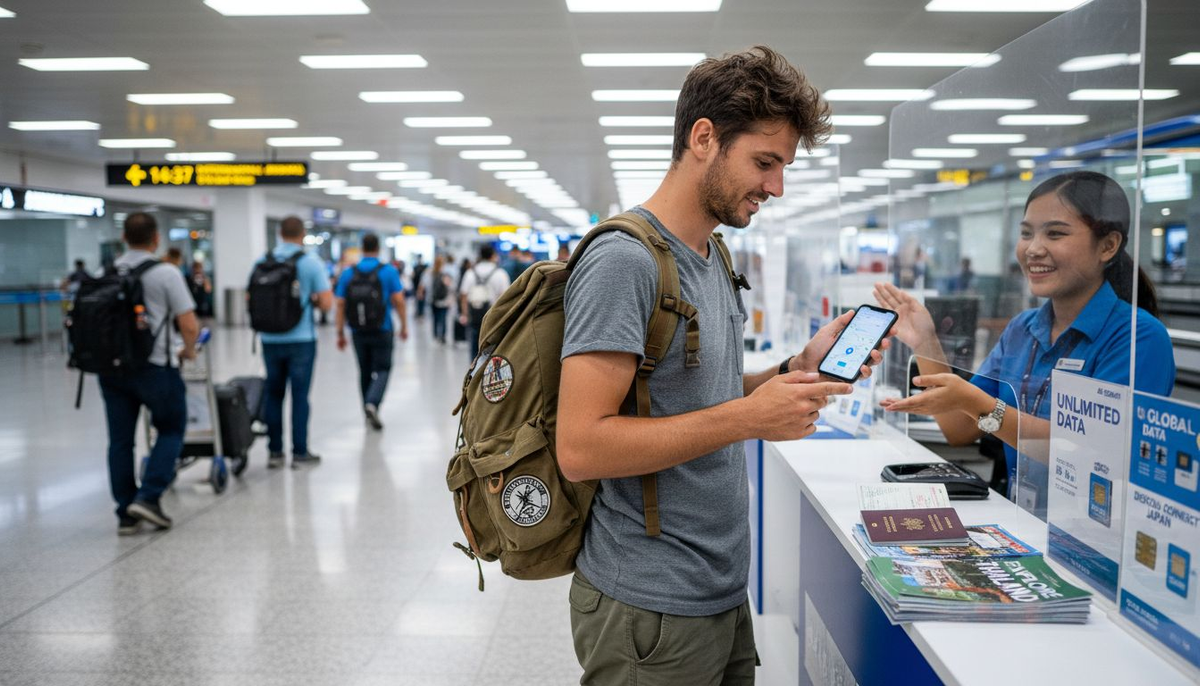
Local SIM restrictions, impact on global travelers
Securing a local SIM card abroad now involves much more than a quick stop at an airport kiosk. With over 200+ destinations enforcing strict registration laws, even American travelers can face lengthy paperwork, privacy questions, and unexpected blocks on their mobile freedom. Understanding these sweeping regulations is crucial before crossing any border. Get the inside track on how modern SIM restrictions impact your global experience, and discover smarter ways to stay connected without unwanted roaming fees.
Key takeaways
Point
Details
Mandatory Registration
Over 200+ destinations require extensive personal identification for SIM card activation, complicating the process for travelers.
Privacy Concerns
Collecting personal information, including biometric data, raises significant privacy issues for international users.
Travel eSIM Advantage
Digital eSIM solutions offer a more convenient alternative to traditional SIM cards, simplifying the activation process and reducing bureaucratic hurdles.
Research Requirements
Travelers should always research destination-specific SIM regulations and consider eSIM options to avoid connectivity challenges.
What are local SIM restrictions today
Travelers worldwide increasingly face complex SIM card registration requirements that transform how mobile connectivity works across borders. Modern telecommunications regulations now mandate extensive personal identification processes for purchasing and activating local mobile SIM cards, creating significant challenges for international travelers seeking seamless communication.
Currently, over 160 governments require mandatory prepaid SIM card registration, demanding varying levels of personal documentation. These regulations typically involve providing government-issued identification, proof of residence, and sometimes even biometric data like fingerprints or facial scans. The primary stated objectives are combating criminal activities and enhancing national security, though research suggests limited direct correlation between registration policies and crime reduction.
The practical implications for global travelers are substantial. Different countries impose wildly different registration requirements, creating a complex landscape of mobile connectivity restrictions. Some key variations include:
- Requiring passport copies for foreign nationals
- Mandating local address verification
- Implementing multi-step registration processes
- Collecting extensive personal information
- Enforcing strict identity verification protocols
These restrictions can transform what seems like a simple task - buying a local SIM card - into a time consuming and potentially frustrating experience. Travelers might need multiple documents, face language barriers, and encounter unpredictable bureaucratic processes that vary dramatically between countries.
Here’s a summary of typical SIM card restrictions and their impact on travelers:
Restriction Type
Common Requirements
Impact on Travelers
Identification
Passport, photo ID
Time-consuming registration
Address Verification
Local address or proof of stay
Document hurdles
Biometric Data
Fingerprint, facial scan
Privacy concerns
SIM Quantity Limits
Max SIMs per person
Constrained connectivity
Pro Tip: Before international travel, research the specific SIM registration requirements for your destination country and consider global eSIM solutions that can bypass these complex local restrictions.
Types of SIM limitations worldwide
Global travelers encounter a complex web of SIM card restrictions that vary dramatically across different countries and regions. These limitations create significant challenges for maintaining consistent mobile connectivity while traveling internationally, with each nation implementing unique regulatory approaches to mobile telecommunications.
The primary types of SIM limitations worldwide can be categorized into several key restriction models. Some countries impose strict personal identification requirements, mandating extensive documentation for SIM card activation. Others implement more nuanced approaches that limit the number of SIM cards an individual can purchase, enforce mandatory periodic re-registration, or require advanced biometric verification.
Specific SIM limitation types include:
- Identification Documentation Restrictions
- Requiring government-issued photo ID
- Mandatory passport verification for foreign nationals
- Collecting detailed personal contact information
- Quantitative SIM Limitations
- Restricting total number of SIMs per person
- Limiting prepaid SIM purchases
- Enforcing strict registration quotas
- Biometric Verification Models
- Mandatory fingerprint scanning
- Facial recognition requirements
- Advanced digital identity verification
These restrictions fundamentally transform mobile accessibility for travelers. Countries like India, Pakistan, and several African nations have particularly stringent registration protocols that can make obtaining a local SIM card an intricate and time-consuming process. Unlimited global eSIM plans offer a strategic alternative to navigating these complex local registration landscapes.
Pro Tip: Research destination-specific SIM registration requirements before international travel and consider digital eSIM solutions that can bypass traditional local restrictions.
How local SIM regulations work
Local SIM regulations represent a complex global framework of mobile telecommunications policies designed to balance national security concerns with consumer connectivity needs. These regulatory mechanisms require mobile operators to implement comprehensive identity verification processes that fundamentally transform how individuals acquire and use mobile communication services across different countries.
The core operational mechanisms of local SIM regulations typically involve multiple interconnected steps. Mobile providers are mandated to collect and verify personal identification documents, record user details in centralized databases, and maintain strict compliance with government-defined registration protocols. This process often includes detailed documentation requirements such as presenting government-issued photo identification, proving residential address, and in some advanced systems, submitting biometric data.
Key operational components of SIM regulations include:
- Documentation Verification
- Collecting government-issued identification
- Verifying personal information accuracy
- Cross-referencing submitted documents
- Registration Tracking
- Maintaining comprehensive user databases
- Monitoring SIM card activation and usage
- Implementing periodic re-registration protocols
- Compliance Enforcement
- Implementing strict registration quotas
- Limiting number of SIMs per individual
- Reporting suspicious activities to authorities
The practical implementation of these regulations varies significantly across different nations. Some countries like India and Pakistan enforce particularly stringent protocols, while others maintain more flexible approaches. Global network connectivity resources can help travelers understand these complex regulatory landscapes and navigate potential challenges.
Pro Tip: Always carry multiple forms of identification and research destination-specific mobile registration requirements before international travel to ensure smooth telecommunications access.
Legal requirements and compliance
The landscape of legal requirements for SIM card registration represents a complex global patchwork of regulations that vary dramatically across different jurisdictions. These legal frameworks aim to balance national security objectives with individual privacy rights, creating a challenging environment for telecommunications providers and international travelers alike.
Legal compliance for SIM registration typically involves multiple intricate layers of regulatory oversight. Mobile operators must navigate a complex set of government-mandated documentation requirements that often include detailed personal information collection, verification processes, and ongoing data management protocols. These requirements can range from basic identification checks to comprehensive biometric data collection, depending on the specific national regulatory environment.
Key legal compliance components include:
- Documentation Standards
- Verifying government-issued identification
- Maintaining accurate user records
- Implementing secure data storage protocols
- Regulatory Reporting
- Submitting user information to authorities
- Tracking SIM card activations
- Monitoring potential suspicious activities
- Privacy Protection Measures
- Implementing data protection safeguards
- Limiting unauthorized information sharing
- Ensuring user consent mechanisms
Many countries struggle to create comprehensive legal frameworks that effectively balance security needs with individual privacy protections. The regulatory landscape remains inconsistent, with some nations implementing stringent requirements while others maintain more relaxed approaches. Global network connectivity resources can help travelers understand these complex legal nuances and navigate potential compliance challenges.
Pro Tip: Research the specific legal requirements for mobile communication in your destination country and consider digital eSIM solutions that can simplify compliance and protect your personal information.
Risks, hidden costs, and practical challenges
The complex landscape of local SIM restrictions presents travelers with a minefield of potential risks and unexpected challenges that extend far beyond simple connectivity concerns. These regulatory frameworks create substantial barriers that can transform what should be a straightforward process of obtaining mobile service into a complex, potentially expensive navigation of bureaucratic requirements.
Practical challenges emerge across multiple dimensions, impacting travelers through increased complexity, financial burdens, and potential privacy vulnerabilities. Mobile operators must invest significant resources in identity verification infrastructure, costs ultimately passed down to consumers through higher service fees, longer activation processes, and intrusive documentation requirements. The ripple effects of these regulations create substantial friction points for international mobile users.
Key risks and challenges include:
- Financial Implications
- Additional registration fees
- Extended processing times
- Potential document authentication costs
- Privacy Vulnerabilities
- Extensive personal data collection
- Potential unauthorized information sharing
- Risk of data breaches
- Operational Challenges
- Complex registration protocols
- Inconsistent verification standards
- Language and documentation barriers
The most significant hidden costs emerge from the potential exclusion of travelers and vulnerable populations who cannot easily navigate these intricate registration processes. Some countries implement such stringent requirements that obtaining a local SIM becomes nearly impossible for international visitors. Travel packages and rates provide alternative solutions that can help travelers circumvent these complex regulatory landscapes.
Pro Tip: Always research destination-specific mobile registration requirements in advance and consider digital eSIM solutions that can provide seamless, hassle-free international connectivity.
Comparing local SIMs and travel eSIMs
The landscape of international mobile connectivity presents travelers with two primary options: traditional local SIM cards and modern travel eSIMs, each offering distinct advantages and challenges. Understanding the nuanced differences between these technologies can significantly impact a traveler’s communication strategy and overall international experience.
Traditional local SIM cards require physical purchase and complex registration processes that vary dramatically across different countries. These physical SIMs often demand extensive personal documentation, including government-issued identification, proof of residence, and sometimes biometric verification. In contrast, travel eSIMs represent a digital alternative that enables instant activation, remote plan management, and significantly reduced administrative friction for international travelers.
Key comparative aspects include:
- Activation Process
- Local SIMs: In-person registration
- Travel eSIMs: Instant digital activation
- Minimal documentation requirements
- Flexibility
- Local SIMs: Single country or limited regional use
- Travel eSIMs: Multiple country coverage
- Easy plan switching and profile management
- Cost Structure
- Local SIMs: Variable pricing, potential hidden fees
- Travel eSIMs: Transparent, often more predictable costs
- Reduced roaming charge exposure
The primary advantage of travel eSIMs lies in their ability to transcend traditional regulatory and logistical barriers. While local SIM cards remain constrained by country-specific restrictions, international travel eSIM solutions provide a more seamless, adaptable approach to global mobile connectivity.
The table below compares local SIMs and travel eSIMs across critical aspects for international visitors:
Aspect
Local SIM Card
Travel eSIM
Purchase Method
In-store, manual registration
Online, instant activation
Documentation
Multiple forms, local proof
Minimal, remote verification
Coverage
Country-specific
Multi-country/global
Price Structure
Varies, hidden charges possible
Transparent, predictable
Pro Tip: Prioritize travel eSIM solutions that offer comprehensive global coverage and flexible data plans to minimize connectivity complications during international travel.
Escape local SIM restrictions with effortless eSIM solutions
Travelers facing complex identification hurdles, address verifications, and biometric demands can find relief with KnowRoaming’s innovative international travel eSIM products. Instead of navigating time-consuming local SIM registrations or worrying about hidden fees and privacy risks, enjoy instant digital activation that works across multiple countries without swapping physical SIMs.
Take control of your global connectivity today by choosing a smart, hassle-free alternative to traditional local SIM cards. Discover transparent pricing, broad coverage, and seamless setup at KnowRoaming. Explore how our digital travel eSIM solutions bypass complicated local regulations so you stay connected everywhere without surprises. Start your journey to simple international mobile data with KnowRoaming now and avoid the pitfalls of local SIM restrictions.
Häufig gestellte Fragen
Burj Al Arab Jumeirah in Dubai is reckoned as the most luxurious hotel on earth. It is the most iconic structure on the Dubai skyline.
The answer can be subjective, depending on what luxury means to you. It could mean staying at a boutique hotel, going on a safari in Africa, visiting a wellness retreat in the desert, or relaxing on a beach in the Caribbean. You choose.
It is recommended that you only start traveling with your children when they are between the ages of 7 and 10. You could consider traveling with them as soon as they turn 3, are out of diapers, and can talk and feed themselves.
Fragile items are items that can break and should rather be carried in your carry-on bag. However, these items do count toward your carry-on or checked bag allowance and may be subject to fees if they are heavy.
This is a method claimed by a guide published in The New York Times on ‘How to Pack a Suitcase”. It claims that you can get through a week’s vacation by packing five sets of socks and underwear, four tops, three bottoms, two pairs of shoes, and one hat.
There are quite a few ways to save money on food. You could book accommodation with a free breakfast or get an apartment with a self-catering kitchen. Shop in the local areas where street food is sold, and don’t buy expensive drinks.
Common identification requirements include providing government-issued identification such as a passport or photo ID, proof of residence, and sometimes biometric data like fingerprints or facial scans.
SIM card regulations can create significant barriers for travelers, including complex registration processes, extensive documentation requirements, and potential language barriers. This can lead to time-consuming experiences when trying to obtain local connectivity.
It’s advisable to research the specific SIM registration requirements for your destination country before traveling. Consider using global eSIM solutions to bypass local restrictions and enable seamless connectivity without the complexities of traditional SIM cards.
Travel eSIMs offer several advantages over traditional local SIM cards, including instant digital activation, minimal documentation requirements, and broader multi-country coverage, making them a more flexible and hassle-free option for international travelers.