تطبيق واحد، السيطرة الكاملة.
قم بإدارة باقاتك وبياناتك وبطاقة eSIM الخاصة بك من هاتفك، أينما كنت.




Yes. The Europe plan covers Belgium and 48 other countries, including France, the Netherlands, Germany, Luxembourg, and the UK, and your phone switches networks by itself at the border. Choose it over a Belgium-only plan if a train to Paris, Amsterdam, Cologne, or London is on the cards. See our support article on whether a region plan covers every country in it.
In Belgium your plan connects to Proximus, Orange, or BASE, with 5G in the cities and 4G LTE elsewhere. Your phone joins the network automatically once your eSIM is turned on. If it hasn't connected a minute after landing, work through the no-signal checklist.
Only on the Europe plan, which covers the UK; a Belgium-only plan stops at the border. If you're already in Belgium on a Belgium plan, add a UK plan to the same eSIM before you board.
Yes, the whole country, with 5G in the cities and 4G on the trains and the coast tram. The only thin patch is the Ardennes forests in the south-east.
A fixed plan costs less overall; an unlimited plan (a daily high-speed allowance, then slower) works out to a lower daily rate the longer you stay. The price depends on how much data you want and how many days you're staying; every current option and price is in the plan selector at the top of this page.
In the app: open My eSIMs, choose your Belgium plan, and tap Top up. The extra data lands on the same eSIM within a few seconds, with nothing new to add or scan. Full steps are in Top up your plan: add data or days without a new eSIM.
Weeks ahead. Your plan doesn't start until you connect at your destination, so a plan bought a month before departure is still complete when you land. Start your plan within 90 days of buying it. See when your plan starts and how the days are counted.
It thins. The Ardennes, in the south-east, is the one gap to plan for: the forest valleys thin the signal on every network. Download maps before a hike.
قم بإدارة باقاتك وبياناتك وبطاقة eSIM الخاصة بك من هاتفك، أينما كنت.
Install your eSIM before you fly. It's live the moment you land, nothing to check, nothing to remember.
Already with us? Get the app on the App Store or Google Play.
Belgium is a country you cross by train in two hours and leave by train as fast, to Paris, Amsterdam, Cologne, or London, which is why the plan question here is really a Europe question. The best eSIM for Belgium is the one that's working when you land at Brussels Airport, so the short train into the city is bought on the platform and the rest of the week is planned on board.
Below: how a Belgium plan works, how to install your eSIM before you fly, what to expect in Brussels, Bruges, Ghent, and Antwerp, and why the Europe plan is usually the better buy.
Install it once. Add a plan for each trip. Top up when you need more data. Your home SIM stays in your phone, with your number on it.
Most travel eSIMs make you start over for every country, which in Europe means a new QR code every few days. KnowRoaming doesn't. You install the KnowRoaming eSIM on your phone once. KR.One, the technology behind it, lets that one eSIM hold plans for every destination. From then on, you add a plan for each trip: Belgium now, Portugal in the spring, the whole continent on a Europe plan when the itinerary gets ambitious. Nothing to scan again, nothing to delete when you get home.
Your plan starts when you connect in Belgium, not when you buy. Buy it weeks ahead, install your eSIM at home, and a delayed flight costs you nothing. The full rule is in when your plan starts and how the days are counted.
Choose a fixed plan for a set amount of data at the lowest overall price, or an unlimited plan when you'd rather not count. Unlimited plans give you a daily high-speed allowance, then a slower speed until the allowance resets the next day. If a fixed plan runs low, top up in the app and the extra data lands on the same eSIM. Hotspot works on every plan, fixed or unlimited; a laptop or a travel partner's phone shares the same eSIM data.
See it in two minutes: Meet KR.One, Install on iPhone, or Install on Samsung.
Do this at home on Wi-Fi. It takes about a minute.
Prefer a QR code? The checkout page and your confirmation email both carry one; scan it from your phone's settings. Every tap is in how to add your plan, start to finish, or watch the iPhone QR walkthrough or the Samsung QR walkthrough. Still no signal after landing? Work through the no-signal checklist.
Brussels Airport has a train straight to the city center in about half an hour; Charleroi, the low-cost airport, is an hour by bus. The SNCB app sells train tickets for the whole country and the STIB app covers Brussels' metro, trams, and buses, both easier to use with data than at a machine. Uber and Bolt run in Brussels.
Cards and phone wallets work almost everywhere, including on the trams. The Grand Place, the Sablon, and the comic-strip murals are the first walk; the museums, the Atomium, and the beer bars all sell or reserve online.
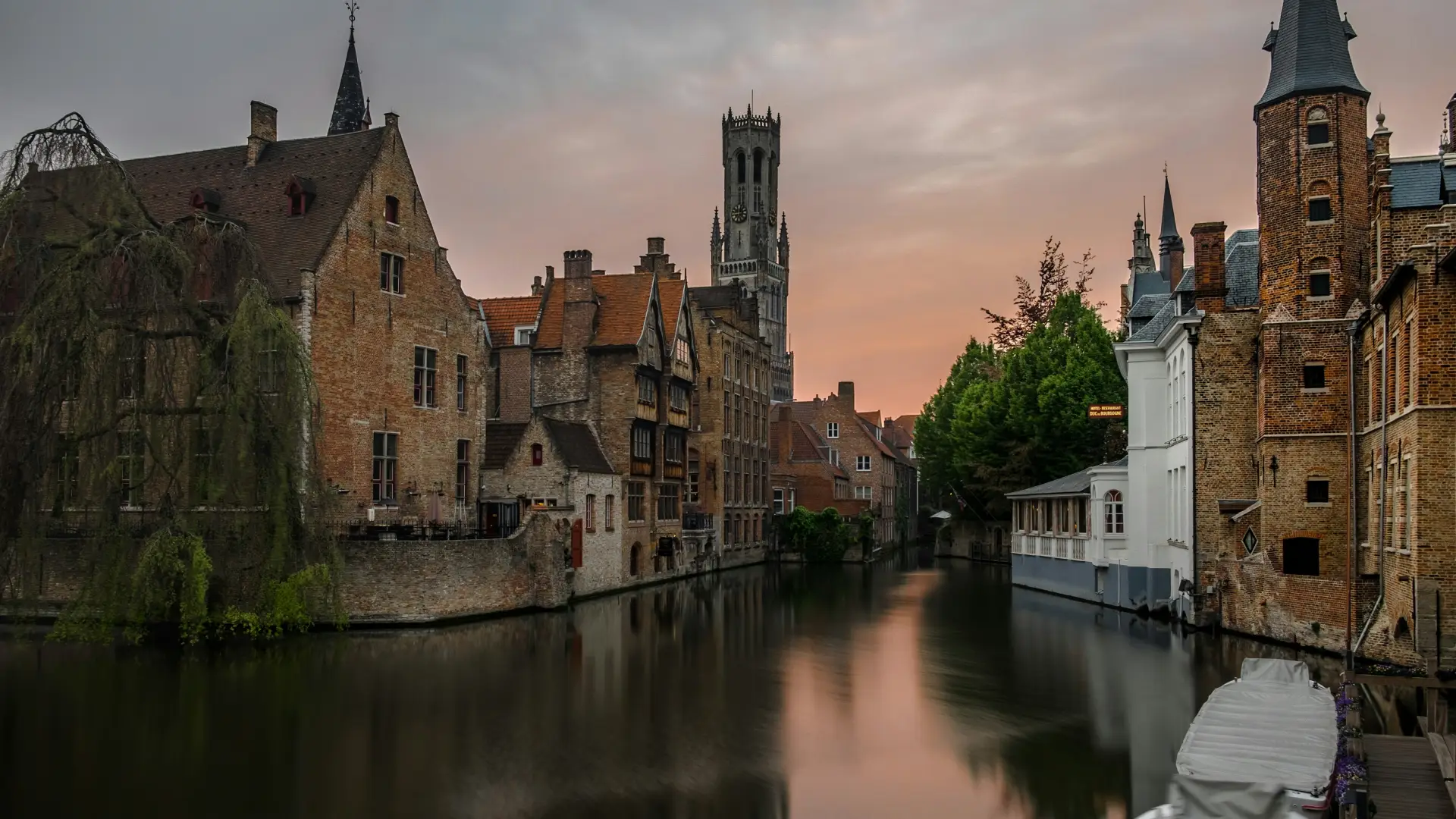
Bruges is an hour from Brussels by train, Ghent half that, Antwerp about 45 minutes; all three fit in a day each, and the trains run every half hour without a reservation. Bruges' canals and belfry fill by mid-morning in season, so the early train earns its keep. The coast tram runs the whole Belgian coast from De Panne to Knokke, and Ostend is the beach town.
Coverage is 5G in every city and 4G on the trains between them; Belgium is flat, dense, and well covered end to end.
Brewery visits, chocolate workshops, and the Christmas markets in Brussels, Bruges, and Liège all take reservations online, and the smaller breweries only open on set days. Tomorrowland in July and the Ghent Festival in the same month are the two events that fill the trains and the hotels; plan around them or for them.
Brussels is the hub: Paris in 1 hour 20 by high-speed train, Amsterdam in under two hours, Cologne in under two, London in two by Eurostar. Every one of those countries, and Luxembourg, is on the Europe plan, 49 countries on one plan, switching networks by itself at the border, the UK included. A Belgium-only plan stops at the border, so for any trip that takes one of those trains, the Europe plan is the better buy from the start. Read whether a region plan covers every country in it for the detail.
The south-east of the country is the Ardennes: forested hills, river towns like Dinant and Bouillon, kayaking on the Lesse and the Semois, and Bastogne's war museums. Namur is the gateway by train; beyond it, the valleys are car and bike country, and the signal thins in the deeper folds of the forest on every network.
It's the one part of Belgium to treat like a mountain region: download the route, save the guesthouse number, and expect the phone to come back when you climb out of the valley.
Brussels is a city of short business trips and long meetings, and Belgian 5G handles video calls from a hotel room without trouble. For a stay of a week or more with calls and a laptop on the hotspot, an unlimited plan, with a daily high-speed allowance, is the right buy; fixed plans suit a weekend. Both are on the plan selector at the top of this page.
Your plan connects to Proximus, Orange, or BASE, with 5G in Brussels, Antwerp, Ghent, Bruges, Liège, and the other cities and 4G LTE across the rest of the country. Your phone picks the network automatically once the plan is on; there is nothing to choose by hand.
The one gap to plan for is the Ardennes, in the south-east, where the forest valleys thin the signal on every network. Download maps before a hike.
Most current iPhone, Samsung Galaxy, and Google Pixel phones support eSIM. Check yours before you add a plan; it takes a few seconds. On iPhone, go to Settings > General > About and look for an EID or Available SIM. On Android, go to Settings > Network & Internet > SIMs and look for an option to add an eSIM. On Samsung, dial *#06# and look for an EID.
Your phone also needs to be carrier-unlocked. If you're not sure, the same check shows you where to look.
Adding a Belgium plan doesn't touch your regular SIM. Calls and texts on your usual number keep working exactly as before. The new plan handles data while you're there, and most phones run both at once without you doing anything else. Bank codes and two-factor texts still arrive on your home number, as long as that line stays switched on.
One plan. No roaming surprises. Live the moment you land.
For a European trip the real competition isn't another eSIM. It's your home carrier's roaming add-on, priced for a weekend and throttled by midweek; the SIM counter in arrivals, after the flight, with a queue; and café Wi-Fi, in a country where even the bus ticket is in an app. A Belgium plan added at home beats all three: one price agreed before you fly, live the second you land, and a Europe plan waiting if the trip grows.
Real travelers rate KnowRoaming 4.5 out of 5 on Reviews.io. More than a decade in travel connectivity, more than 200 destinations, and support that doesn't clock off: WhatsApp and live chat, any time, any day.
Get the app on the App Store or Google Play.
Very easy to use and great coverage
Saleh
Jeddah, SA
I enjoyed using your service it really comes in handy
Fhatuwani
Excellent option when traveling, I fo suggest that yiu add the option to make a normal call to.
Anonymous
London, GB